The standard "best majors to go back to school for" lists are written for a reader who doesn't exist: an 18-year-old with 45 working years ahead of them, infinite patience for ladder-climbing, and no opinion yet about what kind of work feels tolerable. If you are 40 and weighing whether a second bachelor's, a post-bachelor certificate, or a full graduate degree is worth the time and money, almost none of the inputs that drove the original 22-year-old answer still apply to you.
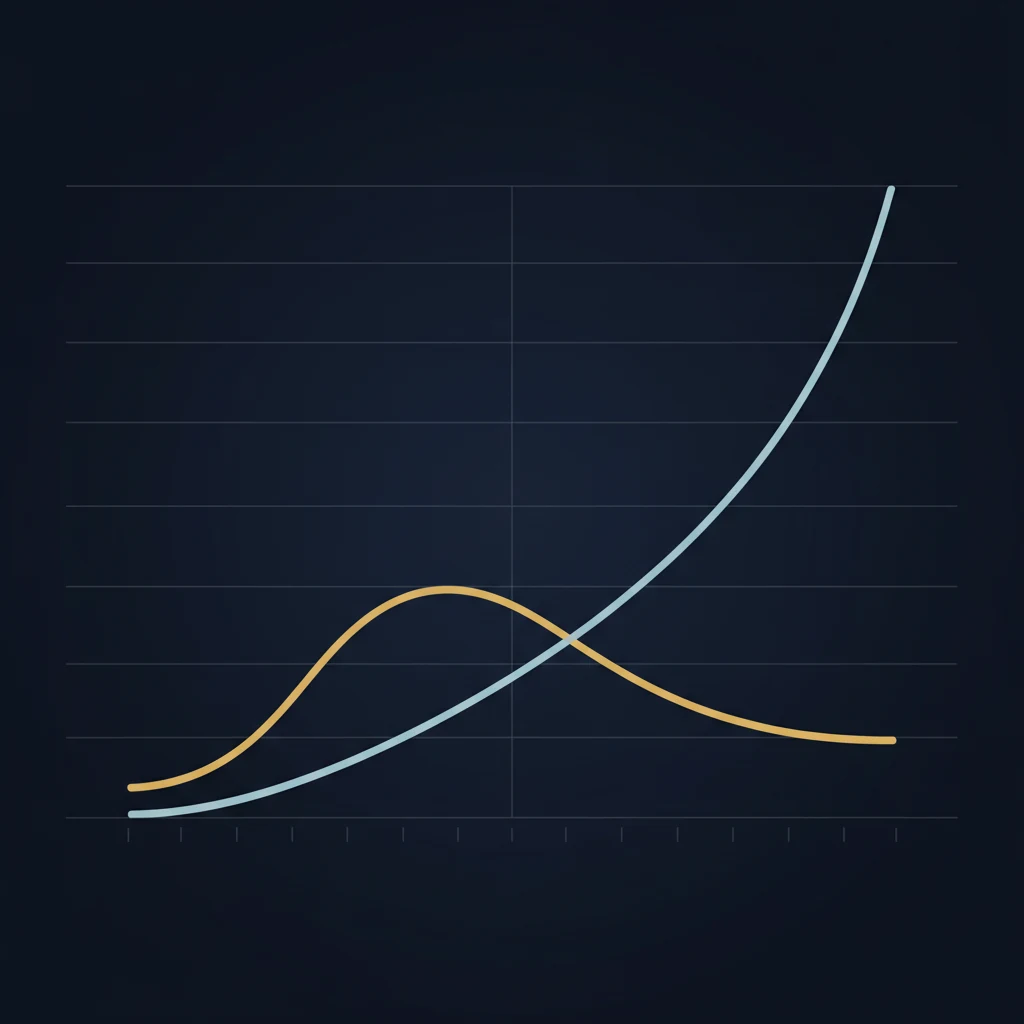
Two shifts in the underlying math are the reason. The first is mechanical: the working horizon between graduation and retirement compresses from roughly 45 years to roughly 25. Any payoff curve a major produces — the ramp from entry-level to peak earnings, the time to break even on tuition and forgone wages — has to fit inside a window slightly more than half as long. The second shift is the AI exposure layer, which the 2023–2026 deployment wave has dropped on top of an entirely separate decision tree. Some majors that look almost identically safe on standard early-career data behave very differently for a 40-year-old, because the cohort of work that gets re-priced first by AI tends to be the structured mid-career tier the late-career entrant is most likely to be sitting in five years after graduation.
This post is about how those two shifts re-rank the obvious answers. We use the same datasets behind our ROI rankings and AI-resistance rankings, but we treat the late-career-entry case as its own analytical problem rather than a footnote on the traditional one.
The 25-year working horizon changes which majors break even
A bachelor's degree that takes four years to earn and produces a $20,000-per-year wage premium over a non-degree baseline breaks even on direct costs and forgone wages somewhere around year 6 to year 10 for a 22-year-old. The same degree starting at 40 has roughly half the working life left to amortize the same upfront cost, so the threshold for "worth it" rises in two ways: the wage premium has to be bigger, or the cost has to be smaller, or both.
Three quantitative things follow from a shorter horizon, and they show up in our EV Employment model:
- Majors with strong but slow-ramping wage curves — the classic "pays off in your 50s" trajectory — lose most of their advantage. A graduate degree that pushes peak earnings ten years out doesn't have ten years of post-peak runway to amortize the delay.
- Majors whose value sits in the floor (probability of landing a degree-required job at all) become disproportionately more attractive, because the late-career-entry penalty on placement gets compounded by the shorter window in which to recover from a bad start.
- The total-cost-of-credential math gets dramatically more sensitive. A second bachelor's with $80,000 in additional debt is a very different bet at 40 than at 22, even if everything else is identical, because the same dollar of debt has half the time to be repaid out of post-graduation earnings before retirement.
The third point matters more than it used to. The 2026 student loan changes shortened Grad PLUS access and tightened income-driven repayment for new borrowers; a 40-year-old taking on graduate or second-bachelor's debt under those rules is looking at a much narrower repayment runway than the 22-year-old version of the same loan.
The AI exposure layer is not symmetrical across age
An AI exposure score — we use a blend of the Felten/Raj/Seamans AIOE and the OpenAI GPTs are GPTs task-level estimates — tells you how much of the routine task content of an occupation is in scope for current and near-term large language models. For a 22-year-old, an exposure score is a forecast about the labor market they will be earning peak wages in twenty years from now. For a 40-year-old, the same score is a forecast about the labor market they will be earning any wages in within ten years of starting.
The asymmetry is sharpest at the mid-career rung. AI tools are not displacing the most senior roles in any occupation first; the senior tier is where judgment, accountability, and inter-team coordination dominate, and current models are not credibly substituting for those. Tools are also not eliminating the most junior roles cleanly, because someone has to operate, verify, and correct the model output. The squeeze is concentrated on the structured mid-career tier — the work where an experienced practitioner is producing standardized outputs at high volume.
That tier is exactly where a 40-year-old career-changer is most likely to land within five to seven years of graduation. A 22-year-old graduate enters at the junior rung and has a decade of climbing before they hit the AI-squeezed band; a 40-year-old graduate often skips into the squeezed band directly because their pre-degree work experience pulls them past the junior rung. This is not a generic AI-displacement claim — it is a specific observation about where, in the typical occupational ladder, AI substitution is most active right now.
The practical implication is that AI exposure should be weighted more heavily for late-career entrants than for traditional ones. A major whose downstream occupations have exposure scores in the upper third should be a harder sell at 40 than at 22, because the late entrant lacks the time to climb past the exposed tier before it re-prices.
Three majors that look like safe career-change picks but punish older entrants
The following three majors are conventionally recommended to mid-career switchers. The recommendation is reasonable for traditional 22-year-old entrants. For a 40-year-old, each has a specific problem the standard lists don't surface.
Accounting. Underemployment is moderate (21.2% in the FRBNY 22-to-27 window) and entry-level placement for second-degree accounting graduates is reliable. The problem at 40 is the AI exposure profile of the mid-tier accounting work that a late-career graduate slots into within three to five years: reconciliation, audit prep, tax preparation, structured financial analysis. These tasks have among the highest in-scope shares for current language models, and the standard career path for a late-career accounting graduate runs directly through the band that's getting re-priced fastest. Public-accounting partner-track work and forensic specialties remain attractive but require additional credentials beyond the bachelor's and an additional 5–7 years to access — which puts a 40-year-old graduate's peak earnings in the late 50s rather than the early 50s.
Computer Science. Underemployment is low (19.1%), and the major remains one of the highest-ROI degrees in our aggregate rankings for traditional graduates. For a late-career graduate, two problems compound. AI exposure for the bachelor's-level coding tier is high and growing — this is the most-deployed productivity surface for current models. And the gradient from "writing code" to "directing how systems are designed and operated" requires depth of accumulated context that's hard to build from a standing start at 40. The major is not wrong for late-career entrants, but the path that worked for 22-year-olds — junior engineer to senior engineer to architect — is exactly the path AI is compressing fastest. A 40-year-old considering this major should plan for the destination to be platform engineering, technical product management, or a specialized vertical (security, ML infrastructure) rather than the open-ended generalist track.
Communications. Frequently suggested as a flexible second-degree path because the coursework is accessible and the credential is recognized. Both halves of the two-risk frame are unfavorable: underemployment for Communications grads is high (53.0% in the FRBNY data) and AI exposure for the downstream occupations is high. For a 22-year-old, the wide variance in outcomes works in their favor — building portfolio, network, and specific positioning over a decade can pull a Communications grad well above the median. For a 40-year-old, the same variance compresses against the shorter horizon: there are fewer years to outperform the median, and the median outcome for the major is not where a $60,000-tuition-plus-foregone-wages investment pays back cleanly.
Three majors that work better at 40 than at 22
The same data also surfaces a smaller set of majors whose payoff structure favors the late-career entrant.
Nursing. The lowest underemployment rate in the FRBNY dataset (12.8%) and one of the lowest AI exposure scores for any bachelor's-route occupation. Patient assessment, intervention, and inter-team coordination resist text-model substitution. The structural reason nursing works disproportionately well for late-career entrants is that the major's premium is in the floor: a licensed RN with a BSN has an almost-guaranteed placement at a known wage, and that placement happens fast — typically within 6–12 months of graduation. A 40-year-old graduate compresses about as quickly into degree-required, AI-resistant work as it is possible to do, and the licensure barrier protects compensation against substitution pressure for the duration of the working life remaining. The compensation ceiling is not as high as the high-variance options, but the floor is reliable and the time-to-floor is short. See our registered nurses career hub for the underlying placement and earnings data.
Special Education and Elementary Education. Underemployment rates of 16.0% and 16.2% respectively, and AI exposure for both occupations is among the lowest of any bachelor's-route career. K–12 teaching is hard to substitute with text models for reasons that are obvious once you describe the job in detail: real-time supervision of children, individualized accommodation, classroom management, and inter-family communication. The compensation problem is real and well-documented — teaching shows up in our lowest-ROI rankings by lifetime-earnings standards — but the calculation differs for a late-career entrant. The floor is high, the time-to-floor is short, and many states offer accelerated alternative-certification routes that compress the credential requirement into 18–24 months. For a 40-year-old willing to accept the wage profile, the placement reliability and AI-resistance are unusual.
Physical therapy assistant or Physical therapist (when paired with the required graduate path). Construction-services-adjacent occupations and skilled healthcare roles share the trait that physical co-presence is intrinsic to the work product. PT outcomes depend on touch, real-time motor assessment, and adaptive treatment progression — none of which current AI substitutes for. The major and credential path is more demanding than a stand-alone bachelor's, but for a late-career entrant the placement reliability and substitution-resistance both index very favorably. See our physical therapists career hub for the credential structure and earnings detail.
Post-bachelor certificate vs. full second degree at 40
For most prospective late-career students, the decision isn't really "which major" — it's "what credential level." The same data suggests a different ranking for that decision than the standard one.
A post-bachelor certificate at 40 has three quantitative advantages over a second bachelor's degree: lower direct cost (typically $8,000–$25,000 vs. $40,000–$90,000), shorter time to completion (typically 9–18 months vs. 4–5 years for working adults), and lower foregone-wage cost. For a candidate whose existing bachelor's was in an adjacent field, the certificate often unlocks the same downstream occupational role at a fraction of the upfront investment. The cohort where this works cleanly is healthcare credentialing, accounting/CPA preparation for graduates with quantitative undergrad work, K–12 alternative certification, and several specialized engineering certifications.
The cohort where it doesn't work is anywhere the regulatory floor requires a full degree — nursing's BSN, PT's DPT, several allied-health professions, and certain teaching credentials in states without alternative routes. In those cases the math gets harder but is still workable; the right move is to look at accelerated degree programs (typically 16–24 months for second-bachelor's in nursing, for example) rather than four-year sequences.
A full graduate degree at 40 is the worst of the three options for most career-changers, and the reason is the same compressed horizon: a master's degree shifts peak earnings out by an additional 2–3 years on a working life that has half the years left to amortize the delay. The exceptions are graduate degrees that unlock licensure (the DPT, MSN, MSW for clinical social work) where the credential is the gate rather than a marginal improvement.
A decision framework for the late-career major question
The matrix from our companion piece on the two risks every bachelor's major carries applies, but the weighting changes. Three substitutions:
- Treat underemployment rate as a floor estimate, not a probability. A 40-year-old career-changer's placement risk is meaningfully higher than the FRBNY 22-to-27 rate because the late-career-entry penalty (employer skepticism about a non-traditional path, smaller alumni network, less time to recover from a slow start) is real. Picking a major whose 22-to-27 rate is in the lowest tier is doing the equivalent of picking the lowest-tier major at 22 in terms of placement reliability.
- Weight AI exposure more, not less. The squeezed-mid-career-tier point above means a late entrant lands close to the exposure tier sooner. Choosing a major whose downstream work is in the lower third of exposure is a more material protection at 40 than at 22.
- Pay attention to the floor more than the ceiling. High-ceiling majors (CS, Finance) reward long ramps. Short-runway entrants need the floor to do most of the work, which means the high-placement, low-exposure quadrant — the smallest quadrant in the matrix, but the one where the major actually does the heavy lifting for you.
The 22-year-old can afford to optimize for ceiling; the 40-year-old should optimize for floor and time-to-floor. That's the substitution that re-ranks the standard list.
The honest summary
A shorter working horizon and a more concentrated AI exposure curve at the mid-career rung make the "best major to go back for at 40" question genuinely different from the "best major at 22" question. The conventional career-change picks — Accounting, Computer Science, Communications — were written for the traditional case. Each has a specific reason it works less well for a late-career entrant. The substitutes — Nursing, Education, healthcare credentialing paths, skilled allied-health degrees — trade ceiling for floor in a way that lines up with what the late-career entrant actually needs from a degree: high probability of placement, short time-to-placement, and substitution-resistant downstream work.
None of this says a 40-year-old shouldn't go back to school. Some career changes are genuinely worth the upfront cost even on a 25-year horizon, especially when the floor of the destination role is high and the time-to-floor is short. What it says is that the optimization function is different from the one that drove the original 22-year-old decision, and the major that maximizes the right function isn't always the major the popular guides suggest.
The data behind every number above is documented in our methodology page. Underemployment rates are from the Federal Reserve Bank of New York Labor Market for Recent College Graduates (Q4 2025 release); AI exposure scores blend the Felten, Raj & Seamans AIOE and OpenAI's "GPTs are GPTs"; earnings and placement data are from the U.S. Department of Education College Scorecard and BLS Occupational Employment and Wage Statistics.